Are you wondering which altcoins might be the next big thing in crypto? You’re not alone. While Bitcoin continues to dominate headlines and portfolios, the world of alternative cryptocurrencies—or altcoins—is buzzing with innovation and opportunity.
The cryptocurrency landscape has evolved dramatically since Bitcoin’s inception, and today’s altcoin market offers everything from lightning-fast payment solutions to revolutionary smart contract platforms. But with thousands of projects vying for attention, how do you separate the genuine game-changers from the noise?
In this comprehensive guide, we’ll explore the five most promising altcoins that crypto analysts are watching closely in 2025. Whether you’re a seasoned trader or just getting started with cryptocurrency investing, this article will help you understand what makes these digital assets special and why they deserve a spot on your watchlist.

What Are Altcoins and Why Should You Care?
Before we dive into our top picks, let’s get clear on what we’re talking about. Altcoins (short for “alternative coins”) are essentially any cryptocurrency that isn’t Bitcoin. Think of them as the creative offspring of Bitcoin’s revolutionary blockchain technology—each designed to solve specific problems or improve upon Bitcoin’s original formula.
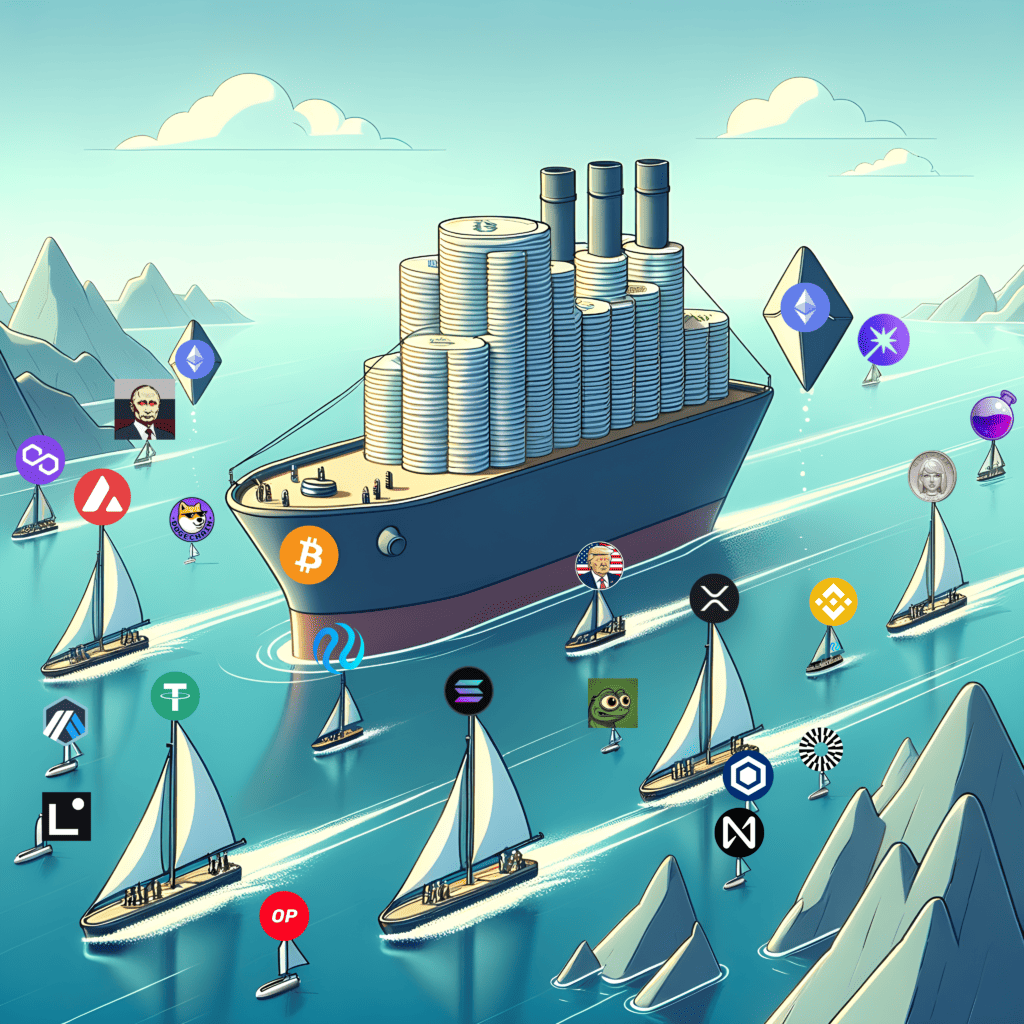
The crypto market is like a vast digital ecosystem where Bitcoin plays the role of the established giant, while altcoins are the innovative startups trying to carve out their own niches. Some focus on faster transactions, others on smart contracts, and some tackle entirely new use cases like decentralized finance (DeFi) or non-fungible tokens (NFTs).
Here’s what makes altcoins fascinating: they’re not just digital money. Many function as utility tokens that power entire ecosystems. Some represent stakes in decentralized projects, while others serve specific purposes like file sharing or decentralized domain name services. It’s like comparing a Swiss Army knife to a simple coin—both have value, but one offers multiple tools for different situations.
The Current State of the Altcoin Market
Right now, we’re in what many call a “Bitcoin dominance” period. Institutional investors have been pouring money into Bitcoin while being more cautious about alternative projects. In fact, nearly $36 billion has flowed out of altcoins in recent months as investors sought the relative safety of the original cryptocurrency.
But here’s the thing about crypto markets—they’re cyclical. What goes up must come down, and what’s out of favor often comes roaring back. Many analysts believe we’re due for an “altseason”—a period when alternative cryptocurrencies significantly outperform Bitcoin. While we can’t predict exactly when this might happen, the smart money is positioning itself now.
How We Selected the 5 Most Promising Altcoins
Choosing the best altcoins isn’t about throwing darts at a board covered in crypto logos. We used a systematic approach based on several key criteria:
Market Fundamentals: We looked at market capitalization, token supply, and tokenomics (how tokens are created and distributed). Projects with clear, sustainable economic models scored higher.
Real-World Utility: Does this project solve actual problems? We prioritized altcoins with clear use cases and working products over speculative projects with fancy whitepapers but no substance.
Community and Development Activity: Strong communities and active development teams are crucial indicators of long-term success. We examined GitHub activity, social media engagement, and developer ecosystem health.
Innovation and Technology: We favored projects pushing the boundaries of what’s possible with blockchain technology, whether through novel consensus mechanisms, scaling solutions, or unique applications.
Market Position and Growth Potential: Finally, we considered each project’s current market position and potential for future growth based on partnerships, roadmaps, and market trends.
The 5 Most Promising Altcoins of 2025
1. Ethereum (ETH): The King of Smart Contracts
Current Price: ~$2,736 | Market Cap: ~$329.5 billion | Rank: #2
If Bitcoin is digital gold, then Ethereum is digital oil—it powers much of the crypto economy. Ethereum isn’t just a cryptocurrency; it’s a complete decentralized computing platform that enables smart contracts and decentralized applications (dApps).
Think of Ethereum as the foundation upon which much of the modern crypto world is built. When you interact with a DeFi protocol, trade NFTs, or use most blockchain applications, there’s a good chance you’re using Ethereum’s infrastructure.
Why Ethereum Remains a Top Pick
The Network Effect: Ethereum has the largest developer ecosystem in crypto. More developers mean more applications, which attract more users, which attracts more developers—it’s a virtuous cycle that’s incredibly difficult for competitors to break.
Proven Track Record: Unlike newer projects that are still proving themselves, Ethereum has been battle-tested through multiple market cycles. It’s survived hacks, scaling challenges, and fierce competition while continuing to innovate.
The Merge Success: Ethereum’s transition to Proof-of-Stake in September 2022 was one of the most complex upgrades in crypto history. The successful completion proved the network’s ability to evolve and significantly reduced its energy consumption by over 99%.
Upcoming Upgrades: Ethereum’s roadmap includes several major upgrades focused on scaling and efficiency. Features like sharding and layer-2 integration promise to make the network faster and cheaper while maintaining security.
What Makes Ethereum Special
Ethereum’s goal is ambitious: creating a decentralized suite of financial products accessible to anyone, anywhere. This vision is particularly powerful for people in countries with limited banking infrastructure. Imagine being able to access loans, insurance, and investment products without needing a traditional bank account—that’s the promise of Ethereum.
The platform uses its native token, Ether (ETH), as both a means of payment within the ecosystem and a store of value. As more applications are built on Ethereum, demand for ETH typically increases, creating a natural supply-and-demand dynamic.
2. Solana (SOL): The Speed Demon
Current Price: ~$196.9 | Market Cap: ~$96 billion | Rank: #5
Solana has earned its reputation as an “Ethereum killer” not through marketing hype, but through impressive performance metrics. Founded in 2017, Solana was designed from the ground up to handle thousands of transactions per second while keeping fees minimal.
If Ethereum is a busy highway with tolls, Solana is like a high-speed rail system—it gets you where you need to go faster and cheaper.
Solana’s Competitive Advantages
Blazing Fast Speeds: While Ethereum processes about 15 transactions per second, Solana can handle over 50,000. This isn’t just a theoretical improvement—it makes a real difference for users who don’t want to wait minutes for transactions to confirm.
Ultra-Low Fees: Transaction fees on Solana typically cost fractions of a penny, compared to Ethereum fees that can spike to $50 or more during busy periods. This makes Solana particularly attractive for smaller transactions and frequent trading.
Innovative Consensus Mechanism: Solana uses a unique “Proof of History” consensus mechanism that timestamps transactions before they’re processed, enabling the network’s impressive speed without sacrificing security.
Growing Ecosystem: The combination of speed and low costs has attracted a vibrant ecosystem of DeFi protocols, NFT marketplaces, and gaming applications. Projects that might be too expensive to run on Ethereum find a natural home on Solana.
Why Solana Has Staying Power
Solana’s growth isn’t just about technical specifications—it’s about user experience. When people can interact with blockchain applications without worrying about high fees or long wait times, adoption naturally follows. The network has demonstrated resilience through various challenges and continues to attract top-tier projects and developers.
3. Cardano (ADA): The Academic’s Choice
Current Price: ~$0.73 | Market Cap: ~$25.6 billion | Rank: #9
Cardano takes a refreshingly different approach to blockchain development. While many projects rush to market with minimal testing, Cardano’s team of engineers, mathematicians, and cryptography experts builds everything on peer-reviewed academic research.
Founded by Charles Hoskinson (one of Ethereum’s co-founders), Cardano has published over 120 academic papers on blockchain technology. It’s like comparing a startup that moves fast and breaks things to a university research lab that measures twice and cuts once.
Cardano’s Research-First Philosophy
Peer-Reviewed Development: Every major feature and upgrade goes through rigorous academic review before implementation. This methodical approach has earned Cardano significant credibility in academic and scientific circles.
Sustainability Focus: Cardano was designed with long-term sustainability in mind. The Ouroboros proof-of-stake consensus mechanism is energy-efficient and mathematically proven to be secure.
Gradual Feature Rollout: Rather than launching with all features at once, Cardano takes a layered approach, building solid foundations before adding complexity. This philosophy prioritizes security and reliability over speed to market.
Recent Momentum and Future Potential
Cardano has been gaining traction with increased on-chain activity and growing developer interest. The platform’s focus on financial inclusion—particularly in developing markets—aligns with global trends toward digital financial services.
Recent developments include smart contract capabilities (finally!), growing DeFi ecosystem, and potential institutional adoption through ETF products. At under $1 per token, ADA offers an attractive entry point for investors who believe in the project’s long-term vision.
The network’s ability to handle identity management, supply chain tracking, and educational credentials positions it well for real-world adoption beyond just financial applications.
4. XRP: The Banking Revolutionary
Current Price: ~$2.36 | Market Cap: ~$136.1 billion | Rank: #4
XRP has always marched to its own beat. While other cryptocurrencies focus on replacing traditional finance, XRP aims to make it better. Created by Ripple in 2012, XRP is specifically designed for cross-border payments—and it’s really, really good at it.
Think of traditional international wire transfers as sending a letter across the world, while XRP is like sending an email. Both accomplish the same goal, but one is dramatically faster and cheaper.
Why XRP Dominates Cross-Border Payments
Institutional Focus: Unlike many cryptocurrencies that target individual users, XRP was built for banks and financial institutions from day one. This focus has led to real-world partnerships and adoption.
Unique Consensus Mechanism: The XRP Ledger doesn’t use energy-intensive mining or staking. Instead, it uses a consensus protocol where trusted validators agree on transaction validity. This makes it incredibly efficient.
Speed and Cost: XRP transactions settle in 3-5 seconds and cost fractions of a penny. Compare this to traditional international transfers that can take days and cost $15-50 in fees.
Regulatory Clarity: After years of legal uncertainty, XRP has gained significant regulatory clarity in key markets, removing a major overhang on its price and adoption prospects.
The Cross-Border Payment Opportunity
The global cross-border payment market is worth trillions of dollars annually, and it’s still largely dominated by slow, expensive traditional systems. XRP’s technology could capture even a small percentage of this market and see massive growth.
Financial institutions are increasingly recognizing the benefits of blockchain-based settlement systems, and XRP’s established relationships and proven technology position it well to capitalize on this trend.
5. Solaxy ($SOLX): The New Kid with Big Dreams
Current Price: ~$0.001748 | Market Cap: Early stage | Rank: Emerging
Solaxy represents the new generation of cryptocurrency projects that aren’t just copying existing solutions—they’re solving new problems created by the success of earlier blockchain networks.
As Solana has grown in popularity, it’s occasionally faced network congestion issues. Solaxy positions itself as a Layer-2 scaling solution specifically for Solana, promising to make the already-fast network even faster and more efficient.
What Makes Solaxy Different
Targeted Solution: Rather than trying to be everything to everyone, Solaxy focuses specifically on scaling Solana. This narrow focus allows for optimization that wouldn’t be possible with a more general approach.
Multi-Chain Bridge: Solaxy aims to bridge liquidity between Solana and Ethereum, potentially unlocking significant value for DeFi users and traders who want to move assets between these major ecosystems.
Strong Presale Performance: The project raised over $45 million in its presale, indicating strong investor interest and providing substantial funding for development and marketing.
Balanced Tokenomics: With 138 billion total tokens and carefully planned distribution, Solaxy’s economic model is designed to incentivize holding and reduce selling pressure.
Early Stage Potential
Solaxy is obviously the highest-risk, highest-reward pick on our list. As an early-stage project, it could potentially see explosive growth if its technology delivers on its promises and gains adoption. However, it also faces the typical risks associated with newer cryptocurrency projects.
The project’s focus on solving real scalability issues and bridging major blockchain ecosystems gives it a clear value proposition that could drive adoption among DeFi users and traders.
Key Factors to Consider When Evaluating Altcoins
Before you invest in any altcoin, it’s crucial to do your homework. Here are the key factors we recommend analyzing:
Market Fundamentals
Total Supply: How many tokens exist, and how many will ever exist? Projects with unlimited token creation face constant inflation pressure.
Market Capitalization: This tells you the total value of all tokens combined. It’s often more important than individual token price.
Tokenomics: How are tokens distributed? Are they concentrated among insiders, or fairly distributed to the community?
Use Cases and Utility
Real Problems: Does this project solve actual problems that people have today, or is it a solution in search of a problem?
Working Product: Can you actually use the product today, or is it still just a whitepaper and promises?
Market Size: How big is the problem this project is trying to solve? Larger markets mean more growth potential.
Community and Development
Active Development: Check GitHub repositories for recent activity. Dead projects have dead code.
Community Engagement: Strong communities help drive adoption and provide feedback for improvements.
Team Background: Who’s building this? Do they have relevant experience and a track record of success?
Market Position
Competition: How does this project compare to alternatives? What’s its competitive advantage?
Partnerships: Are established companies actually using this technology?
Exchange Listings: Being listed on major exchanges like Binance or Coinbase provides liquidity and credibility.
The Future of Altcoins: What’s Next?
The altcoin market is at a fascinating inflection point. We’re seeing increasing institutional interest in cryptocurrency, growing regulatory clarity in major markets, and continued innovation in blockchain technology.
Several trends are likely to shape the altcoin landscape in the coming years:
Institutional Adoption: As more traditional financial institutions explore blockchain technology, altcoins with clear institutional use cases (like XRP for payments) may see increased adoption.
Regulatory Clarity: Clear regulations will help legitimate projects while eliminating purely speculative tokens. This should improve overall market quality.
Interoperability: Projects that can bridge different blockchain ecosystems (like Solaxy) may become increasingly valuable as the multi-chain future develops.
Real-World Applications: Altcoins that move beyond speculation to solve actual problems in areas like supply chain, identity, and finance are likely to see sustained growth.
Investment Considerations and Risk Management
Let’s be crystal clear about something: cryptocurrency investing is extremely risky. The market is known for its volatility, and prices can swing dramatically in both directions. Here are some crucial considerations:
Risk Factors
Volatility: Crypto prices can lose 50%+ of their value in days or weeks. Only invest money you can afford to lose completely.
Regulatory Risk: Government actions can significantly impact crypto prices. Stay informed about regulatory developments in your jurisdiction.
Technology Risk: Blockchain projects face technical challenges, security vulnerabilities, and competition from newer technologies.
Market Risk: The entire crypto market tends to move together, especially during major market events.
Best Practices for Altcoin Investing
Diversification: Don’t put all your money in one project. Spread risk across multiple quality altcoins.
Dollar-Cost Averaging: Consider investing smaller amounts regularly rather than making one large purchase.
Research Thoroughly: Understand what you’re investing in. Read whitepapers, check team backgrounds, and understand the technology.
Set Realistic Expectations: While some altcoins have seen massive returns, most investments will be more modest. Plan accordingly.
Stay Informed: The crypto market moves fast. Follow reputable news sources and project updates.
Conclusion: Positioning for the Next Altcoin Cycle
The five altcoins we’ve discussed—Ethereum, Solana, Cardano, XRP, and Solaxy—represent different approaches to blockchain innovation. From Ethereum’s established smart contract platform to Solaxy’s emerging scaling solution, each offers unique value propositions and growth potential.
Ethereum continues to dominate the smart contract space with its massive developer ecosystem and ongoing upgrades. Solana provides speed and efficiency that makes blockchain applications actually usable. Cardano takes the measured, academic approach that could pay off in long-term reliability. XRP has carved out a specific niche in cross-border payments with real institutional adoption. And Solaxy represents the new wave of projects solving problems created by earlier blockchain success.
The current market environment, with Bitcoin dominance high and capital flowing out of altcoins, may actually represent an opportunity for patient, well-researched investors. History suggests that altcoin cycles do return, and those positioned in quality projects often benefit significantly.
However, remember that this information is for educational purposes only and shouldn’t be considered investment advice. The cryptocurrency market is unpredictable, and you should never invest more than you can afford to lose. Consider consulting with financial professionals who understand cryptocurrency investing before making any significant investments.
The altcoin market offers exciting opportunities for those willing to do their research and manage their risk appropriately. Whether the next altseason starts tomorrow or takes another year to develop, having a watchlist of quality projects like these five altcoins will help you stay prepared for whatever the crypto market brings next.
As always in cryptocurrency: do your own research, understand the risks, and invest responsibly. The future of altcoins is being written right now—make sure you’re informed enough to participate wisely.