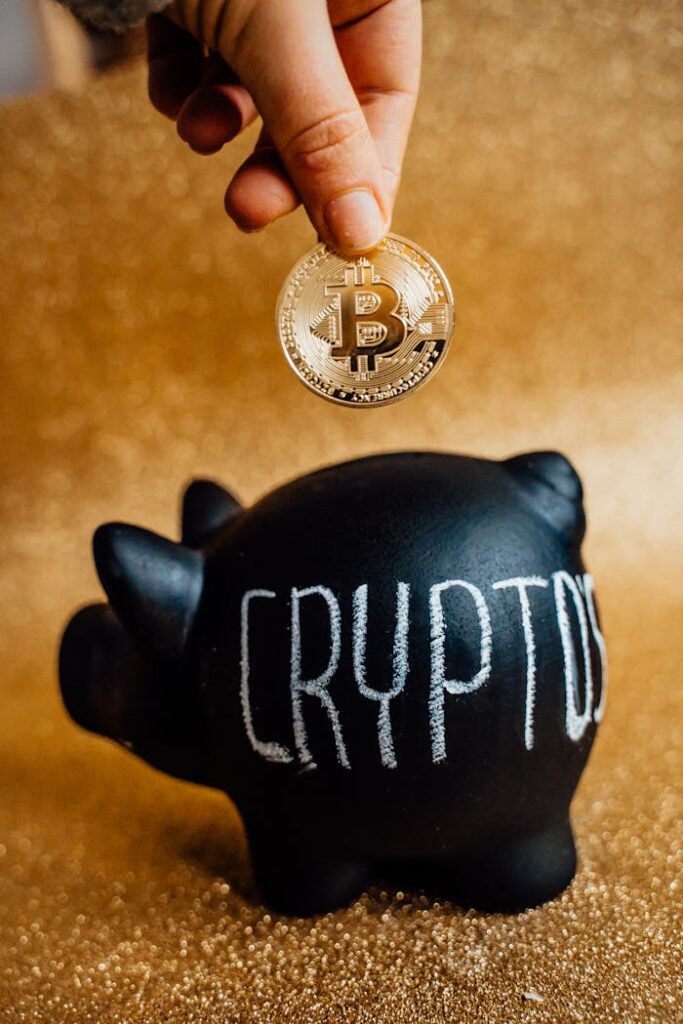
If you’ve ever felt overwhelmed by cryptocurrency jargon or wondered what all the hype is about, you’re not alone. The crypto world can seem like a foreign language filled with technical terms, acronyms, and concepts that feel impossibly complex. But here’s the thing – it doesn’t have to be that way.
Whether you’re completely new to cryptocurrency or you’ve been dabbling but want to deepen your understanding, this guide will break down everything you need to know. We’ll explore the foundational technology, dive into specific applications, and yes, we’ll even decode that crypto slang that seems to dominate Twitter and Reddit threads.
Ready to demystify crypto once and for all? Let’s dive in.

Understanding Blockchain: The Foundation of Everything
Before we talk about Bitcoin, Ethereum, or any other cryptocurrency, we need to understand blockchain – the technology that makes it all possible.
Think of blockchain as a digital ledger, but instead of being stored in one place (like a bank’s computer), it’s distributed across thousands of computers worldwide. Every transaction is recorded in “blocks,” and these blocks are linked together chronologically to form a “chain.” Hence, blockchain.
What makes this revolutionary? Traditional financial systems require a central authority – like a bank – to verify and process transactions. Blockchain eliminates this need by using cryptographic algorithms and network consensus to verify transactions. This means you can send value directly to someone else without needing a middleman.
The key characteristics that make blockchain special include:
Decentralization: No single entity controls the network. Instead, it’s maintained by participants (called nodes) distributed globally.
Transparency: All transactions are visible on the public ledger, though personal identities remain pseudonymous.
Immutability: Once a transaction is confirmed and added to the blockchain, it becomes extremely difficult to alter or reverse.
Security: Cryptographic hashing and consensus mechanisms make the network highly resistant to fraud and hacking attempts.
This foundation enables not just cryptocurrencies, but also smart contracts, decentralized applications, and entire financial ecosystems that operate without traditional intermediaries.
Bitcoin and the Great Fork Wars: Understanding Network Evolution
Bitcoin, the first and most well-known cryptocurrency, hasn’t remained static since its creation in 2009. As the network grew and faced scalability challenges, the community disagreed on how to solve these problems. This led to what many call the “fork wars” – a series of network splits that created new versions of Bitcoin.
What Are Bitcoin Forks?

A fork occurs when the rules governing a blockchain network change. There are two main types:
Soft forks are backward-compatible upgrades that tighten or add new rules without breaking existing functionality. Think of them as software updates that improve the system while maintaining compatibility.
Hard forks are more dramatic – they create permanent changes that aren’t backward-compatible, often resulting in a completely new cryptocurrency.
The Major Bitcoin Hard Forks
Bitcoin XT (2015): One of the first major attempts to increase Bitcoin’s block size from 1MB to 8MB to handle more transactions. While it gained some support, it never achieved the consensus needed for widespread adoption.
Bitcoin Classic (2016): Proposed a more modest increase to 2MB blocks. Despite significant miner support at one point, it also failed to achieve the necessary consensus.
Bitcoin Unlimited: Took a different approach by allowing miners to choose their own block sizes. This created controversy about potentially centralizing power in the hands of large miners.
Bitcoin Cash (2017): The most successful Bitcoin fork, created when disagreements about scaling solutions reached a breaking point. Bitcoin Cash increased the block size to 8MB (later 32MB) and removed the proposed SegWit upgrade. It remains one of the top cryptocurrencies by market capitalization.
Bitcoin Gold (2017): Aimed to make Bitcoin mining more accessible by changing the mining algorithm from SHA-256 to Equihash, which is more resistant to specialized mining hardware (ASICs).
Bitcoin SV (2018): “Satoshi’s Vision” forked from Bitcoin Cash, pushing for even larger blocks and claiming to restore Bitcoin to its original design. It increased block sizes to 128MB and later removed the cap entirely.
These forks highlight an important aspect of blockchain technology – governance. When communities disagree on the direction of a project, they can literally split and create separate networks, each pursuing their own vision.
Decentralized Finance (DeFi): Rebuilding Finance from the Ground Up
Now let’s talk about one of the most exciting developments in the crypto space: Decentralized Finance, or DeFi. If blockchain is the foundation and cryptocurrencies are the first application, DeFi is the entire financial skyscraper built on top.
What Is DeFi?
DeFi aims to recreate traditional financial services – lending, borrowing, trading, insurance, and more – using decentralized technologies. Instead of relying on banks, brokers, or other intermediaries, DeFi applications (often called “dApps”) use smart contracts to automatically execute financial agreements.
Smart contracts are self-executing contracts with terms directly written into code. They automatically execute when predetermined conditions are met, eliminating the need for intermediaries and reducing the potential for human error or manipulation.
How DeFi Works

The magic of DeFi lies in its composability – different protocols can work together like financial Lego blocks. Here’s how some key DeFi services work:
Decentralized Exchanges (DEXs): Platforms like Uniswap and SushiSwap allow users to trade cryptocurrencies directly with each other without a central authority. They use automated market makers (AMMs) and liquidity pools instead of traditional order books.
Lending and Borrowing: Protocols like Aave and Compound let users lend their crypto to earn interest or borrow against their holdings. Everything is governed by smart contracts, with interest rates determined by supply and demand.
Yield Farming: Users can provide liquidity to various protocols and earn rewards in the form of additional tokens. This creates opportunities for passive income but also introduces new risks.
Synthetic Assets: Platforms can create tokens that track the price of real-world assets like stocks, commodities, or fiat currencies, allowing exposure to traditional markets through DeFi.
The DeFi Ecosystem
Most DeFi applications are built on Ethereum, though other blockchains like Binance Smart Chain, Solana, and Avalanche have developed their own DeFi ecosystems. The total value locked (TVL) in DeFi protocols has grown from virtually zero to hundreds of billions of dollars, demonstrating the massive interest in these financial innovations.
However, DeFi isn’t without risks. Smart contract bugs, economic exploits, and the general volatility of crypto markets can lead to significant losses. The space is still experimental, and users need to understand these risks before participating.
NFTs: Digital Ownership in the Blockchain Era
Non-Fungible Tokens, or NFTs, represent another major application of blockchain technology. While they gained mainstream attention through expensive digital art sales, NFTs have much broader implications for digital ownership.
Understanding Non-Fungibility
To understand NFTs, you first need to understand fungibility. Fungible assets are interchangeable – one dollar bill is worth the same as any other dollar bill. Cryptocurrencies like Bitcoin are fungible; one Bitcoin equals another Bitcoin.
Non-fungible assets are unique and not interchangeable. Think of rare trading cards, original artwork, or real estate – each has distinct characteristics that affect its value. NFTs bring this concept to the digital world.
How NFTs Work
NFTs are tokens on a blockchain (usually Ethereum) that represent ownership of a unique digital item. The token contains metadata that points to the digital asset and proves ownership through the blockchain’s immutable record.
Common types of NFTs include:
- Digital artwork and collectibles
- Music and audio files
- Virtual real estate in metaverse platforms
- Gaming items and characters
- Domain names
- Tickets and memberships
The NFT Marketplace
NFT marketplaces like OpenSea, Rarible, and Foundation allow creators to mint (create) NFTs and buyers to purchase them. The minting process involves creating the token on the blockchain and uploading the associated digital content to a storage system.
Pros and Cons of NFTs
Advantages:
- Provides verifiable proof of digital ownership
- Enables creators to monetize digital work directly
- Can include smart contract royalties for ongoing creator compensation
- Creates new possibilities for digital art and collectibles
Disadvantages:
- Environmental concerns due to blockchain energy consumption
- Speculation and price volatility
- Questions about actual utility and long-term value
- Technical challenges with storage and accessibility
Essential Crypto Slang: Speaking the Language
The crypto community has developed its own rich vocabulary of slang terms, memes, and acronyms. Understanding this language isn’t just about fitting in – it often conveys important market sentiment and trading psychology. Let’s decode the most essential terms:

Investment and Trading Terms
HODL: Perhaps the most famous crypto term, originating from a misspelled “hold” in a Bitcoin forum post. It now stands for “Hold On for Dear Life” and represents a long-term investment strategy of holding crypto despite market volatility.
WAGMI: “We’re All Gonna Make It” – an optimistic rallying cry expressing confidence in crypto’s future success.
FOMO: “Fear of Missing Out” – the anxiety that drives people to buy into rising markets, often leading to poor investment decisions.
FUD: “Fear, Uncertainty, and Doubt” – negative sentiment or misinformation that can drive down prices. Often used to describe skeptical media coverage or regulatory threats.
Diamond Hands: Refers to holding investments through extreme volatility without selling. The opposite of “paper hands,” which describes someone who sells at the first sign of trouble.
Market Sentiment and Behavior
Mooning: When a cryptocurrency’s price is rapidly increasing, it’s said to be “going to the moon.”
LFG: “Let’s F***ing Go” – an expression of excitement and bullish sentiment.
Degen: Short for “degenerate,” referring to someone who makes risky, speculative trades often without proper research.
Rekt: Crypto slang for “wrecked,” describing someone who has suffered significant losses.
Ape In: To invest in something quickly and with significant amounts, often without thorough research.
Bag Holder: Someone holding a cryptocurrency that has lost significant value, often hoping for a recovery.
Technical and Cultural Terms
Shill: To promote a cryptocurrency, often for personal gain. Someone who constantly promotes a particular coin might be called a “shill.”
Pump and Dump: A scheme where the price of a coin is artificially inflated (pumped) before being sold off (dumped), leaving later buyers with losses.
Whale: An individual or entity that holds large amounts of cryptocurrency, capable of influencing market prices with their trades.
DYOR: “Do Your Own Research” – a reminder that investors should research projects independently rather than relying on others’ recommendations.
GM: “Good Morning” – a common greeting in crypto Twitter that has become a community ritual.
Why Crypto Slang Matters

This specialized vocabulary serves several purposes. It creates community bonds among crypto enthusiasts, efficiently communicates complex market emotions, and often contains valuable insights about market psychology. When you see widespread use of terms like “FUD” or “FOMO,” it can indicate market sentiment that might affect prices.
The Bigger Picture: Why This All Matters
Understanding blockchain, Bitcoin forks, DeFi, NFTs, and crypto culture isn’t just about individual technologies – it’s about recognizing a fundamental shift in how we think about money, ownership, and digital interaction.
Blockchain technology promises to reduce our reliance on traditional intermediaries, potentially making financial services more accessible and efficient. DeFi is already demonstrating this by providing financial services to people who might not have access to traditional banking.
NFTs, despite current controversies, are exploring new models of digital ownership and creator monetization. As our lives become increasingly digital, questions of ownership and authenticity in digital spaces become more important.
The various Bitcoin forks show how decentralized networks can evolve and adapt, even when communities disagree. This demonstrates both the flexibility and the challenges of decentralized governance.
Getting Started: Your Next Steps
If you’re ready to explore the crypto world more deeply, here are some practical next steps:
Education First: Continue learning through reputable sources, online courses, and community resources. The crypto space evolves rapidly, so ongoing education is crucial.
Start Small: If you decide to invest, start with amounts you can afford to lose. Crypto markets are highly volatile and speculative.
Use Reputable Platforms: Choose well-established exchanges and wallets with good security records.
Understand the Risks: Be aware of scams, technical risks, and the experimental nature of many crypto projects.
Join Communities: Engage with crypto communities on Reddit, Discord, or Twitter to stay informed and learn from others’ experiences.
Conclusion: Demystifying the Future
Cryptocurrency and blockchain technology represent one of the most significant technological developments of our time. While the space can seem overwhelming with its technical complexity and unique culture, breaking it down into understandable components makes it much more accessible.
From the foundational blockchain technology to the innovative applications in DeFi and NFTs, from the governance lessons of Bitcoin forks to the community-building power of crypto slang, each element plays a part in this emerging digital economy.
The crypto space will continue evolving, with new innovations, challenges, and opportunities emerging regularly. By understanding these fundamental concepts and staying curious about new developments, you’ll be better equipped to navigate this exciting and rapidly changing landscape.
Remember, the goal isn’t to become an expert overnight, but to build a solid foundation of understanding that you can expand upon as you continue your crypto journey. Whether you’re interested in the technology, the investment opportunities, or the cultural phenomenon, you now have the knowledge to engage with cryptocurrency in a more informed and confident way.
Welcome to the future of finance – it’s going to be an interesting ride.