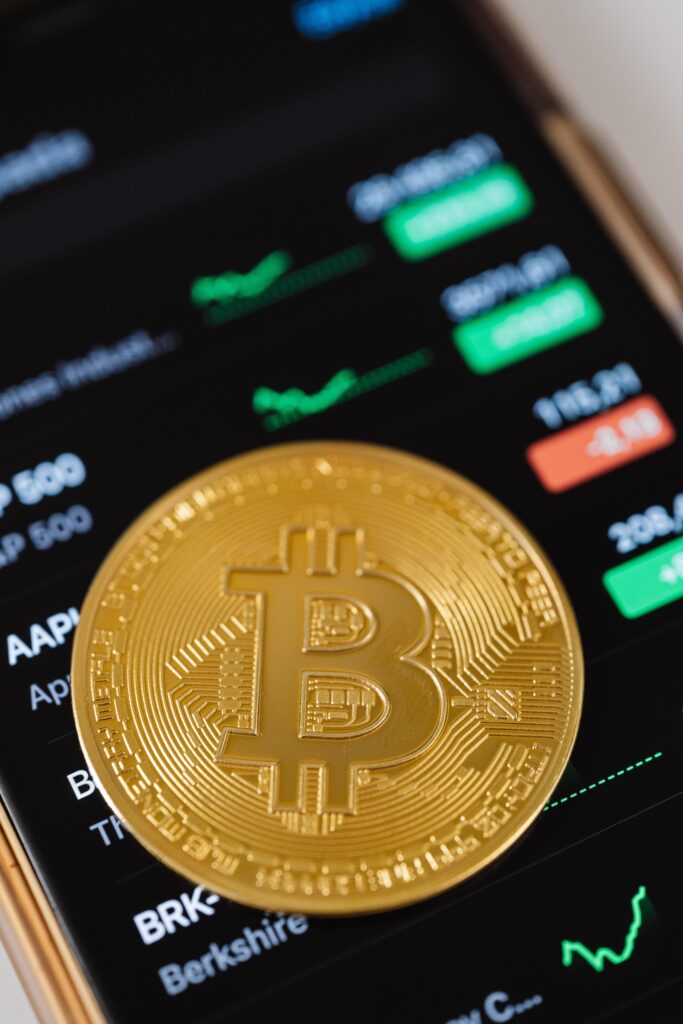
The world of digital finance has rapidly evolved, and at its forefront stands cryptocurrency. Once a niche topic discussed by tech enthusiasts and libertarians, cryptocurrency has undeniably moved towards the mainstream, garnering significant attention from individual investors, institutions, and governments alike1…. Despite its growing prominence, a general lack of understanding about what cryptocurrency truly is and how it functions remains widespread47. This guide aims to demystify cryptocurrency, providing a comprehensive overview for beginners, drawing on insights from various expert sources.
Understanding Cryptocurrency: The Basics
At its core, cryptocurrency is a form of payment that can be exchanged online for goods and services89. It is a digital asset that utilizes distributed ledger technology, most commonly known as blockchain technology, to facilitate and process transactions1011. The term “cryptocurrency” itself highlights its reliance on cryptographic protocols to secure transactions and verify the transfer of assets, making counterfeiting virtually impossible910. Unlike traditional fiat currencies, which are issued and controlled by central banks and governments, cryptocurrencies are global, decentralized, and designed to be unstoppable8….

While many companies have issued their own currencies, often called tokens, which can be traded for specific goods or services provided by that company, the simplest way to acquire them often involves exchanging real currency for cryptocurrency89.
The genesis of modern cryptocurrency is often attributed to Bitcoin, launched in January 2009 by an anonymous entity known as Satoshi Nakamoto16…. Bitcoin’s creation emerged from a desire to address fundamental flaws in traditional internet commerce, which heavily relies on financial institutions as trusted third parties. Satoshi highlighted issues such as reversible transactions, high transaction costs making small payments impractical, and the need for merchants to collect personal information from customers1720. Bitcoin was designed to create an electronic payment system where two parties could transact directly, without the need for a mediator, aiming for low transaction costs and non-reversible payments20. This foundational concept of decentralized, peer-to-peer electronic cash is what distinguishes Bitcoin and many other cryptocurrencies from conventional financial systems1820.
Since Bitcoin’s inception, the cryptocurrency market has experienced exponential growth. The total value of all cryptocurrencies, for instance, ballooned from $145 billion in 2017 to over $2.5 trillion by mid-202121. Even with significant market fluctuations, the ecosystem has grown substantially, with cryptocurrency capitalization nearing half the value of all US notes and coins in circulation as of July 20221. This remarkable growth underscores the increasing difficulty for asset managers and investors to ignore the space, regardless of their sentiment towards it1.
The Foundation: Understanding Blockchain Technology
The core innovation underpinning cryptocurrencies is blockchain technology811. Blockchain is fundamentally a distributed database shared among the nodes of a computer network22. Its decentralized nature means that no single entity controls it; instead, it is spread across many computers globally, managing and recording transactions823.
Here’s a simplified breakdown of how it works:
•
Transaction Initiation: When a new transaction is entered (e.g., sending Bitcoin to another user), it is first transmitted to a network of peer-to-peer computers scattered worldwide824.
•
Validation: These networked computers, or “nodes,” work together to solve complex equations or cryptographic puzzles to confirm the validity of the transaction8…. This process ensures the transaction is legitimate and prevents “double-spending” – the act of using the same cryptocurrency twice2526.
•
Block Formation: Once confirmed, legitimate transactions are clustered together into “blocks”8.
•
Chain Creation: When a block reaches its data storage capacity (for Bitcoin, approximately 2,000 transactions), it is added onto the chain, creating a long, permanent history of all transactions – the “blockchain”8….
•
Network Update: Every node on the network receives an updated list of all transactions, ensuring complete transparency and accuracy within the system2324.
The appeal of blockchain technology lies significantly in its security and immutability823. The data structure within a blockchain ensures that information, once recorded, cannot be altered without changing every subsequent block in the chain26. This mass alteration would create mismatches in embedded digital signatures, making forgery practically impossible26. This security feature, often referred to as the “51% protocol” or “51% attack,” implies that a malicious actor would need to control at least 51% of the blockchain’s computing power, an activity deemed extremely costly and time-consuming, and thus, purely hypothetical in well-established networks like Bitcoin28.
Beyond just cryptocurrencies, experts anticipate that blockchain has the capacity for significant advancements across the entire economy, from finance and banking to cloud computing and video games29….
Key Characteristics Defining Legitimate Cryptocurrency
For a cryptocurrency to be considered legitimate and function effectively as a form of money, it generally needs to satisfy several criteria, many of which Bitcoin exemplifies3435:
•
Scarcity: This refers to the ease with which a currency can be reproduced or originated. A limited supply ensures that monetary value of individual units remains under control3436. Bitcoin, for instance, has a hard cap of 21 million units that can ever be mined or bought, making its supply inherently scarce3637. This contrasts with conventional fiat currencies, which can be printed at the discretion of centralized authorities, potentially leading to inflationary tendencies3738.
•
Divisibility: A currency should be divisible into smaller units of value3435. Bitcoin, despite its high price per coin, is highly divisible, meaning investors can purchase fractions of a Bitcoin39.
•
Portability: The currency should be easily transportable and exchangeable3435. Digital currencies, by their nature, excel in portability, allowing for arbitrary amounts of value to be moved anywhere over the Internet with relative ease compared to physical assets like gold1540.
•
Durability: A currency should be able to be reused without deterioration3435. Digital currencies, being intangible, inherently possess this quality.
•
Fungibility: One unit of the currency should be identical to another unit3541. This means that one Bitcoin is interchangeable with any other Bitcoin, similar to how one dollar bill is interchangeable with another.
•
Recognizability: The currency should be widely accepted as a medium of exchange3542. While Bitcoin’s adoption is growing annually, it still lags behind fiat currency in widespread acceptance, indicating it’s still in an early stage of its journey42.
•
Uniformity: All versions of the same denomination should have the same value35.
Another critical aspect of cryptocurrencies is their inherent volatility43…. While cryptocurrencies like Bitcoin have shown spectacular appreciation since their launch, their daily returns can frequently fluctuate around plus or minus 10%4548. This high volatility is a distinguishing characteristic, and investors need to be prepared for significant price swings, with drops of 10% in a single day and 30% in a month being common occurrences4649. Despite this, it’s argued that cryptocurrencies do not have more “tail events” (extreme negative movements) than traditional indices like the S&P 500 when measured by three standard deviation moves, and risk can be managed by mixing crypto with cash or pursuing active strategies like volatility targeting4344.
The initial positioning of Bitcoin also carried strong political convictions, often aligned with crypto-anarchism and libertarian ideals, seeking to operate outside established legal frameworks and governmental control14…. Early advocates viewed Bitcoin as a permanent challenge to state-backed currencies, leading to its early use in transactions often regulated or forbidden in traditional systems, such as gambling and illicit goods on platforms like Silk Road50…. This “New Wild West” perception initially garnered negative media attention255. However, the space has evolved, with many advocates now performing a cognitive split, distinguishing Bitcoin as a political experiment from its role as a disruptive, borderless payment network51.
Consensus Mechanisms: Proof of Work (PoW) vs. Proof of Stake (PoS)
To maintain the security and integrity of a decentralized blockchain, a consensus algorithm is crucial. This algorithm forces nodes in the network to agree on the state of the ledger, preventing issues like double-spending2556. Two primary types dominate the cryptocurrency landscape:
•
Proof of Work (PoW): This is the consensus mechanism used by Bitcoin and many other early cryptocurrencies57. In PoW, “crypto miners” use powerful computers to race to solve complex mathematical hash puzzles58…. The first miner to solve the puzzle gets the right to add the next block of verified transactions to the blockchain and is rewarded with newly minted cryptocurrency (mining rewards)25…. This process requires an immense amount of computing power and, consequently, significant energy consumption58…. Concerns about the environmental impact of PoW blockchains, particularly Bitcoin, have led some to reconsider its use6265.
•
Proof of Stake (PoS): Created as an environmentally friendly alternative to PoW, PoS does not involve competitive mining6265. Instead, validators are chosen to create new blocks based on the amount of cryptocurrency they “stake” (hold and lock up) as collateral6566. The more coins a validator stakes, the higher their chance of being selected to validate transactions and earn staking rewards6566. This method grants more decision-making power to current owners of the cryptocurrency and significantly reduces energy consumption66. Ethereum, for instance, has moved from a PoW to a PoS consensus algorithm67. The taxation of staking rewards is a subject of ongoing debate, with some arguing they should only be taxed when sold or dispossessed68.
The Diverse World of Cryptocurrencies: Beyond Bitcoin
While Bitcoin often dominates headlines, the crypto space is incredibly diverse and much deeper than popular tokens like Bitcoin and Ether4369. There are over 15,000 different cryptocurrencies traded publicly, and the number continues to grow7071. These “altcoins” (alternative coins) aim to address perceived limitations of Bitcoin or offer unique functionalities1972.
Categories of cryptocurrencies include:
•
Altcoins: Any cryptocurrency other than Bitcoin is generally considered an altcoin7273. Examples include Ethereum (ETH), Solana (SOL), Algorand (ALGO), Avalanche (AVAX), Cardano (ADA), Polygon (MATIC), Chainlink (LINK), Uniswap (UNI), SushiSwap (SUSHI), Aave (AAVE), Compound (COMP), yearn.finance (YFI), Filecoin (FIL), Decentraland (MANA), Axie Infinity (AXS), Litecoin (LTC), Ripple (XRP), Stellar Lumens (XLM), and Monero7274. Many altcoins offer advantages like lower transaction fees or faster processing speeds compared to Bitcoin39. Some also become development platforms for new applications, like Ethereum, which hosts thousands of applications including MakerDAO and Uniswap6975.
•
Stablecoins: These cryptocurrencies are designed to minimize price volatility by having their value pegged to a real-world asset, such as a fiat currency (like the US dollar) or precious metals69…. They merge the low volatility of sovereign currencies with the decentralized settlement assurance of public blockchains, enabling stable, efficient transfers over the internet without traditional banking encumbrances40. Key examples include Tether’s USDT, MakerDAO’s DAI, and the USD Coin (USDC)79.
•
Security Tokens: These are digital versions of traditional stocks, offering ownership in a company and potentially dividend payouts. They are governed by regulations similar to conventional securities79.
•
Utility Tokens: These tokens are used to purchase specific utilities or services, redeem rewards, or pay network fees within a particular network80. They can be thought of as digital passes or gift cards for a blockchain-based service.
•
Meme Coins: Often created as jokes or based on internet memes, these tokens like Dogecoin and Shiba Inu are primarily driven by speculation rather than specific use cases74…. While they can experience rapid price surges, they often have little to no fundamental value33….
Non-Fungible Tokens (NFTs): Unique Digital Assets
Beyond cryptocurrencies, the blockchain has given rise to Non-Fungible Tokens, or NFTs83. An NFT is a unique and non-interchangeable unit of data stored on a blockchain84. Unlike cryptocurrencies, which are fungible (one Bitcoin is the same as another), NFTs are unique. They can be associated with reproducible digital files such as photos, videos, and audio, representing ownership of these unique digital items8384.
The value of NFTs can be driven by a combination of factors, including scarcity and speculation85. On-chain NFTs often offer greater liquidity, as they can be easily traded on popular networks like Ethereum85. NFTs also present opportunities for passive income through various mechanisms:
•
Renting Out NFTs: In games or other platforms, NFTs can be borrowed, with rental agreements governed by smart contracts86.
•
Royalties: Creators of NFTs can mint them to automatically receive a fixed percentage of royalties every time their NFT is sold in the secondary market, enforced by smart contracts86.
•
Staking NFTs: Combining NFTs with decentralized finance (DeFi) allows users to “stake” their NFTs, locking them up to earn a yield through a DeFi protocol smart contract86.
•
Providing Liquidity: NFTs can also be used to provide liquidity within decentralized finance ecosystems86.
Popular digital marketplaces for NFTs include OpenSea.io, Rarible, and Foundation, alongside NFT-specific platforms like NBA TopShot and Axie Marketplace87.
Acquiring and Storing Cryptocurrencies Safely
For individuals looking to enter the crypto market, centralized exchanges (CEXs) are the most common platforms for purchasing cryptocurrencies8889. Reputable exchanges like Binance.US, Coinbase, Kraken, Crypto.com, and Gemini allow users to buy, sell, and convert cryptocurrencies88…. The process typically involves:
1.
Selecting a reputable exchange91.
2.
Setting up an account and performing Know Your Customer (KYC) requirements, which usually involve verifying identity with a driver’s license or passport91.
3.
Saving a secret phrase (often a recovery phrase or seed phrase) as it is crucial for accessing funds91.
4.
Setting up two-factor authentication and strong, secure passwords91.
5.
Logging into the exchange on a secure, internet-connected device91.
6.
Selecting and purchasing the desired crypto asset or currency91.
While many investors leave their crypto holdings on centralized exchanges for convenience, a popular phrase among cryptocurrency enthusiasts warns: “not your keys, not your coins”92. This refers to the fact that when cryptocurrency is held on an exchange, the exchange possesses the cryptographic keys to your assets, making them the sole custodian92. This goes against the decentralized ethos of crypto, which aims to remove third-party control over funds92.
For true ownership and enhanced security, it is advised to move cryptocurrency off exchanges into crypto wallets, where the wallet owner possesses the private keys92. There are generally two types of wallets:
•
Hot Wallets: These are connected to the internet (e.g., online wallets, mobile apps, desktop software like MetaMask)87. They offer convenience for frequent transactions but are more vulnerable to online attacks93.
•
Cold Storage (Hardware Wallets): These are physical devices that store cryptographic keys offline (e.g., Ledger devices)94. They are considered the most secure option for storing significant amounts of cryptocurrency, as they are largely immune to online hacking attempts94.
To move crypto from a hot wallet (like an exchange) to cold storage, one typically copies the receive address from their hardware wallet (e.g., Ledger Live), pastes it into the exchange’s withdrawal section, sends a small test amount, and then the full amount after verification94. Securing your computer with malware scanners or using private banking sessions on virtual machines like Tails OS is also recommended before handling crypto transactions90.
Investing and Trading Strategies in the Crypto Market
Engaging with cryptocurrency can involve various approaches, from short-term trading to long-term investing95.
•
Investing vs. Trading:
◦
Investing often involves a long-term approach, like “HODLing” (a common term referring to buying and holding cryptocurrency for years)95. This hands-off method avoids short-term fluctuations and potentially capital gains taxes, but requires significant patience and assumes the asset will not become worthless95.
◦
Trading involves more active strategies, such as scalping (10-30 minute trades), day trading (buying and selling within the same day), swing trading (holding for days to weeks), or positional trading (holding for weeks to 6-12 months)96.
•
Fundamental Analysis (FA): This involves rigorously studying an asset to determine if it is undervalued or overvalued, similar to stock market analysis97. For cryptocurrencies, this can include examining “on-chain metrics” like network hash rate, distribution of funds, and active addresses97. However, FA is currently less suitable for cryptocurrencies due to the asset class’s novelty, lack of standardized valuation frameworks, and the market’s high driven by speculation and narratives75….
•
Technical Analysis (TA): This method involves analyzing past trading activity and price variations to predict future price movements9699. TA is widely used in crypto markets, where much of the action is driven by speculation99.
•
Paper Trading: For beginners or experienced traders, paper trading (trading with fake money) is a valuable way to test strategies without risking real capital100. This can be as simple as manually recording “buy” and “sell” prices or using simulators that mimic popular trading interfaces100.
Risk Management and Avoiding Scams
The cryptocurrency market, while offering significant opportunities, is also rife with risks, including volatility and various scams46101. It’s crucial to understand that this is not a linear journey to riches, and continued volatility is expected for years to come49.
Common crypto scams include:
•
Phishing: Attempts to gain access to your crypto wallet by impersonating legitimate exchanges or services to trick you into revealing private keys93. Reputable exchanges will never ask for your private key93.
•
Fraudulent Business Opportunities: Scammers impersonate individuals or create fake business opportunities to trick victims into transferring crypto directly to their accounts93102.
•
Cloud Mining Scams: These often resemble Ponzi schemes, promising huge daily gains if you deposit fiat or crypto into a “mining group”103. They display fake user numbers and statistics and often prefer communication on less formal channels like Telegram or WhatsApp103.
•
“Rug Pulls”: A type of scam where developers of a cryptocurrency project suddenly abandon it and run off with investors’ funds, often by selling off their holdings, leaving the token worthless84104. A notable example is the Squid Game crypto scam84105.
The golden rule of crypto investing is: Never invest more than you can afford to lose106. It’s also advised that if you’re new to financial markets, cryptocurrency might not be the best starting point due to its extreme volatility, which can be overwhelming for first-time investors47. Thorough due diligence is crucial before investing in any cryptocurrency, especially altcoins, as many are still fraudulent or lack fundamental value39….
The Regulatory Landscape and Taxation in the United States
The regulatory environment for cryptocurrency in the United States remains complex and evolving109…. Federal agencies have largely attempted to apply existing regulatory frameworks to this new technology, leading to ambiguous guidance for developers and investors110112.
•
Commodity Futures Trading Commission (CFTC): The CFTC has asserted jurisdiction over cryptocurrencies, classifying them as commodities under the Commodity Exchange Act110113. This means the CFTC has regulatory oversight when virtual currencies are used in derivatives contracts or when fraud or manipulation involves a virtual currency traded in interstate commerce110112.
•
Securities and Exchange Commission (SEC): The SEC claims regulatory oversight when a cryptocurrency passes the Howey test, thereby being deemed an “investment contract” and thus a security110112. The Howey test assesses if an asset is: (1) an investment of money, (2) in a common enterprise, (3) with an expectation of profits, (4) derived solely from the efforts of others114115. Bitcoin, for example, is generally considered by the SEC to fail the Howey test due to its decentralized nature and lack of a central common enterprise115. However, other cryptocurrencies launched through Initial Coin Offerings (ICOs), where founders sell newly created tokens to fund development with an expectation of profit for purchasers, may be classified as securities114115. This “regulation-through-litigation” approach has led to unclear directions for the industry112.
•
Anti-Money Laundering (AML) and Know Your Customer (KYC) Regulations: Institutional investors and exchanges are increasingly bound by AML/KYC regulations, requiring them to collect identifying customer information and report suspicious activities. This can sometimes conflict with the inherent desire for privacy and anonymity in Bitcoin transactions91….
•
Custody: For institutional investors, physical custody of cryptocurrency defined by a private key is a significant consideration. Losing a private key means losing assets, as there is no password-recovery mechanism. Specialized companies now offer custody services116.
Taxation of Cryptocurrencies in the United States:
The Internal Revenue Service (IRS) provided initial guidance in 2014, stating that cryptocurrencies are taxed as “property” for federal income tax purposes73…. This classification has significant implications:
•
Double Taxation: When cryptocurrency is received as payment for services or goods, its fair market value is includible in gross income (ordinary income tax). If that cryptocurrency is later sold or dispossessed, it triggers a second taxable event, subject to capital gains or losses121…. This contrasts with traditional currencies, which are not subject to such double taxation122.
•
Volatility Impact: The “property” classification fails to account for cryptocurrencies’ extreme volatility. A taxpayer might be taxed on ordinary income that exceeds the cryptocurrency’s subsequent fair market value, leading to losses even after paying income tax on the initial receipt122123.
•
Mining Rewards: Cryptocurrency earned from mining on a PoW blockchain is considered includible in a taxpayer’s gross income when received, and the miner gets that amount as their basis119120.
•
Staking Rewards: There is ongoing debate on whether staking rewards are taxable when received or only when sold or dispossessed. If they auto-populate in a wallet without a sale or exchange, some argue it’s akin to creating property and shouldn’t be taxed until disposed of68120.
This taxation scheme arguably disincentivizes the adoption of cryptocurrencies as a form of everyday payment122123. Proposed changes include providing a de minimis non-recognition event for small cryptocurrency transactions and taxing staking rewards only upon sale or disposition68123.
The Future of Digital Money
Despite the complexities and challenges, cryptocurrencies and blockchain technology are here to stay and are poised to become an integral part of the business and financial world4…. The narrative around crypto is shifting from a purely speculative or anti-establishment phenomenon to one of mainstream integration and technological innovation6….
Key future implications and trends include:
•
Economic Efficiency and Global Impact: Experts believe blockchain and cryptocurrencies will enhance economic efficiency and have a broad, lasting impact on global financial markets, affecting payments, banking, securities settlement, title recording, and cybersecurity1530.
•
Disruption of Traditional Finance: Stablecoins, with their blend of low volatility and decentralized settlement, are seen as a significant disruptor to the traditional banking system by allowing fast, global transfers of fiat currency equivalents without conventional encumbrances4078. Decentralized Finance (DeFi) offers new avenues for lending, borrowing, and other financial services without intermediaries, and cryptocurrency lending, often asset-backed, is growing3296.
•
Beyond Currency: Blockchain Applications: The utility of blockchain extends far beyond just currencies. It’s being explored for secure digital identity management, fraud-free insurance claim management through smart contracts, and revolutionizing cloud computing with “Web3” concepts31. Blockchain gaming is also emerging as a new way to onboard users into the crypto space3233.
•
Mainstream Adoption: With major companies integrating blockchain into their operations, and public figures promoting crypto, its journey into the mainstream commercial sector continues5….
•
Long-Term Investment Potential: While volatility is expected to persist, many believe that cryptocurrencies, particularly Bitcoin, represent a significant asset class that will appreciate over time, rewarding those with conviction and patience49106. In fact, it is suggested that the riskiest financial move over the next decade might be to not own any crypto at all125.
In conclusion, cryptocurrency is a groundbreaking digital asset built on secure blockchain technology, offering a decentralized alternative to traditional financial systems. While it comes with inherent volatility and regulatory ambiguities, understanding its core concepts, diverse applications, and security practices is essential for navigating this dynamic and rapidly evolving digital landscape. As the world continues to digitalize, cryptocurrencies are poised to play an increasingly significant role in the global economy.